









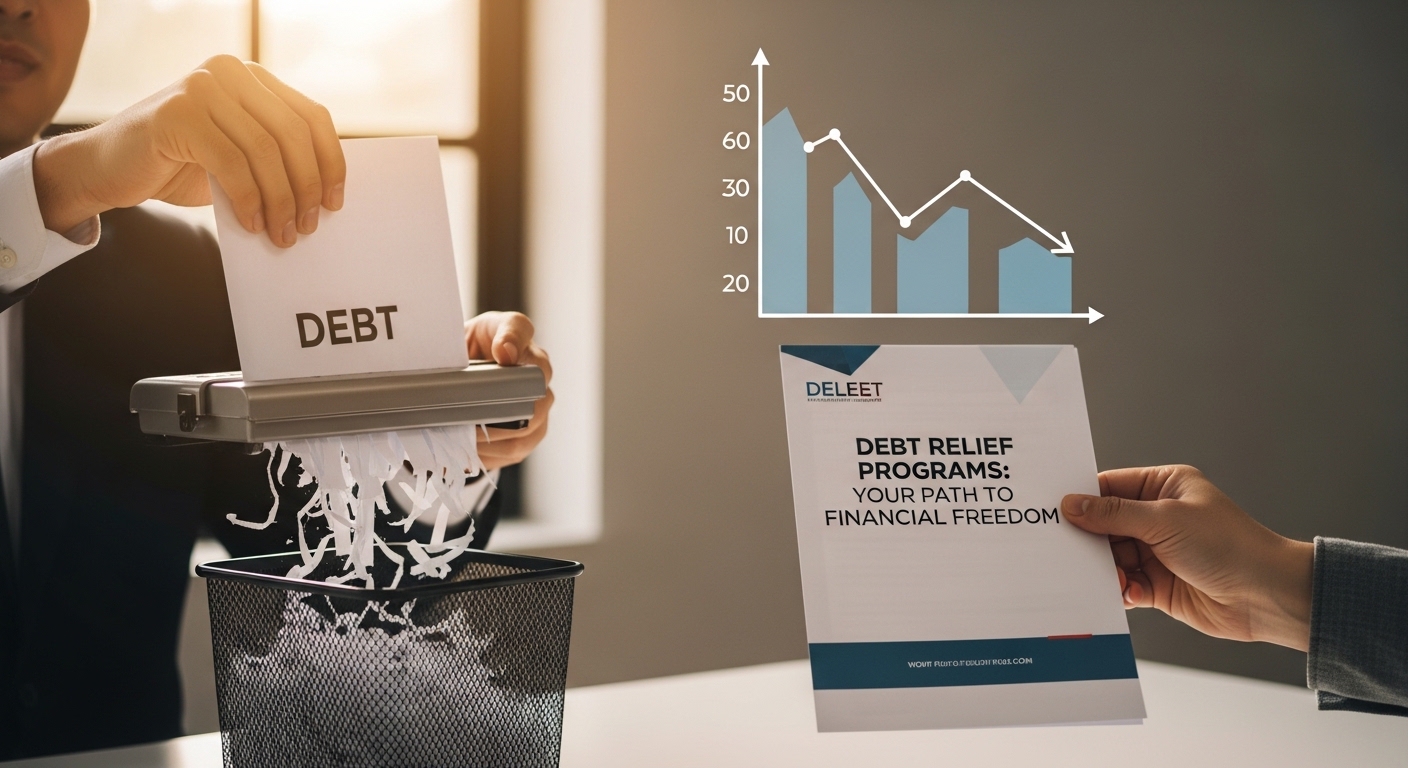
Opening your mailbox shouldn’t be a source of anxiety. Yet, for millions of people, the daily arrival of bills, late notices, and collection letters triggers a pit in the stomach that never quite goes away. When minimum payments start eating up your entire paycheck, it feels less like living and more like surviving.
If you are stuck in this cycle, you might feel like there is no way out. But the financial industry offers specific tools designed to help you break free. These are collectively known as debt relief programs.
Navigating these options can be confusing. There are nonprofit counselors, for-profit settlement companies, and banks all offering different solutions. Some can save you thousands of dollars, while others might damage your credit score for years. Understanding the mechanics of each option is the first step toward regaining control of your financial future. This guide breaks down how these programs work, the risks involved, and how to decide which path is right for you.
What Are Debt Relief Programs?
At their core, debt relief programs are strategies designed to make your debt more manageable or to eliminate it entirely. These programs don’t just happen; they usually involve negotiating with creditors to change the terms of your debt. This could mean lowering your interest rate, extending the time you have to pay, or even reducing the total amount you owe.
These programs are generally intended for unsecured debt. This includes credit cards, medical bills, and personal loans. Secured debt, such as mortgages or auto loans, is rarely eligible for these types of relief because the lender can simply repossess the asset if you stop paying.
The Main Types of Debt Relief
Not all relief is created equal. The right choice depends entirely on your income, your credit score, and how much you owe. Here are the four most common approaches.
1. Debt Management Plans (DMP)
A Debt Management Plan is arguably the safest route for your credit score. These plans are typically offered by nonprofit credit counseling agencies.
How it works: You work with a credit counselor who reviews your finances. They negotiate with your creditors to lower your interest rates and waive late fees. instead of paying your creditors individually, you make one single monthly payment to the counseling agency, which then distributes the funds to your creditors.
Who it’s for: This is ideal for people who have a steady income and want to pay back everything they owe but are being crushed by high interest rates. It usually takes 3 to 5 years to complete.
2. Debt Consolidation Loans
Debt consolidation isn’t technically “relief” in the sense that the debt is forgiven, but it is a powerful tool for restructuring.
How it works: You take out a new personal loan with a lower interest rate and use that money to pay off all your high-interest credit cards. You are left with one loan and one monthly payment.
Who it’s for: This works best for those with a “good” or “excellent” credit score. If your score is low, you likely won’t qualify for an interest rate that makes the consolidation worth it. The danger here is behavioral; if you pay off your credit cards but don’t close the accounts or change your spending habits, you might run up the balances again, leaving you with twice the debt.
3. Debt Settlement
This is where the terrain gets rockier. Debt settlement involves hiring a company to negotiate a lump-sum payment with your creditors for less than what you actually owe.
How it works: You stop paying your creditors. Instead, you put money into a savings account controlled by the settlement company. Once the account grows large enough—and your accounts are significantly past due—the company approaches the creditor and offers the lump sum. Because the creditor fears getting nothing at all, they often agree to take the lower amount.
Who it’s for: This is a hardship option. It is for people who are considering bankruptcy but want to avoid it.
The Risks:
- Credit Score Damage: Because you stop paying your bills, your credit score will tank significantly.
- Legal Action: Creditors may sue you while you are saving up the lump sum.
- Tax Consequences: The IRS considers forgiven debt as income. If you settle a $$10,000$ debt for $$5,000$, you may have to pay taxes on the $$5,000$ difference.
4. Bankruptcy
Bankruptcy is a legal process that provides a fresh start for people who cannot pay their debts. It is generally considered the option of last resort.
How it works:
- Chapter 7: Your non-exempt assets are sold to pay off creditors, and the remaining eligible debt is discharged. This happens quickly, often in a few months.
- Chapter 13: You keep your assets but agree to a court-ordered repayment plan that lasts 3 to 5 years.
Who it’s for: If your debt is insurmountable (often exceeding 50% of your annual income) and there is no realistic way to pay it off within five years, bankruptcy might be the most logical step. It stays on your credit report for 7 to 10 years, but it stops collection calls and lawsuits immediately.
How to Spot a Debt Relief Scam
Because people in debt are often desperate for a solution, scammers flock to this industry. Being able to spot a bad actor is crucial for your protection.
Watch out for companies that charge fees before they settle your debts. Under the Telemarketing Sales Rule, it is illegal for companies to charge upfront fees for debt settlement services. They can only charge you after they have successfully renegotiated your debt.
Additionally, be wary of guarantees. No reputable company can guarantee that a creditor will forgive your debt or lower your interest rates. If a company promises to make your debt disappear for “pennies on the dollar” without knowing your specific financial situation, walk away.
Choosing the Right Path for You
Deciding on a debt relief program is a personal calculation involving math and risk tolerance.
If your credit score is still intact and you just need better terms, look into Debt Consolidation or a Debt Management Plan. These options preserve your financial reputation while making the day-to-day payments manageable.
If you are already missing payments and your credit score has dropped, Debt Settlement might offer a way out without the stigma of bankruptcy, provided you can handle the tax implications and aggressive collection calls.
If you have zero disposable income and assets are minimal, bankruptcy might be the mercy mechanism you need to reset your life.
Regaining Your Financial Freedom
Debt Relief Programs provide structured strategies to reduce outstanding balances, stop escalating interest and penalties, and create a realistic path toward financial stability. Debt may feel heavy, but it is not permanent. Taking action is the most powerful step you can make. Ignoring the issue only allows interest and fees to compound, deepening the burden, while proactive solutions replace uncertainty with clarity, control, and forward momentum.
Start by gathering your statements and calculating exactly what you owe. Then, reach out to a nonprofit credit counselor. Most offer free initial consultations to help you review your budget and understand your options. Whether you choose to consolidate, settle, or reorganize, using a debt relief program is a proactive step toward a future where your paycheck belongs to you, not your creditors.