







The modernization of warehouse environments has brought about a significant shift in how safety is managed and enforced. In 2026, the reliance on manual oversight is rapidly being replaced by integrated technological systems that provide real-time feedback and intervention. Forklift operations remain one of the most high-risk activities in any industrial setting, requiring a multi-layered approach to risk mitigation that combines operator competence with advanced hardware and clear site protocols.
Improving safety for forklift drivers is not merely about following a checklist; it is about fostering a culture where safety is engineered into the workflow. By leveraging current advancements in artificial intelligence, telematics, and material handling accuracy, facilities can dramatically reduce the frequency of collisions, tip-overs, and equipment failures.
1. Implement AI-Powered Monitoring and Telematics
One of the most transformative shifts in forklift safety is the integration of Artificial Intelligence (AI) and telematics. Modern forklift fleets are increasingly equipped with 360-degree camera systems that use computer vision to detect pedestrians, obstacles, and risky operator behaviors in real-time. These systems can distinguish between a static object and a moving person, providing audible or visual alerts to the driver long before a potential collision occurs.
Furthermore, telematics systems provide warehouse managers with a wealth of data regarding vehicle speed, hard braking events, and impacts. By analyzing this data, safety officers can identify specific zones in the warehouse where near-misses frequently occur or recognize patterns in driver behavior that may require additional coaching. Automated “slow-down” zones can also be programmed into the equipment, ensuring that forklifts automatically reduce speed when entering high-traffic areas or blind intersections.
2. Utilize Augmented Reality (AR) and Simulated Training
Traditional classroom-based training is being supplemented—and in many cases replaced—by immersive Augmented Reality (AR) and high-fidelity simulation. AR allows operators to wear headsets that overlay digital hazards, such as virtual pedestrians or narrow racking aisles, onto their actual work environment. This provides a safe space to practice emergency maneuvers and complex load-handling tasks without the risk of real-world damage or injury.
In 2026, the standard for certification has moved toward continuous behavioral assessment rather than a one-time test. Simulated environments can recreate rare but dangerous scenarios, such as hydraulic failure or sudden weight shifts on a slope, ensuring that drivers are mentally and muscle-memory prepared for the unexpected. These training modules are data-driven, providing instant feedback on an operator’s reaction time and spatial awareness, which allows for highly personalized professional development.
3. Prioritize Accurate Load Weight Verification
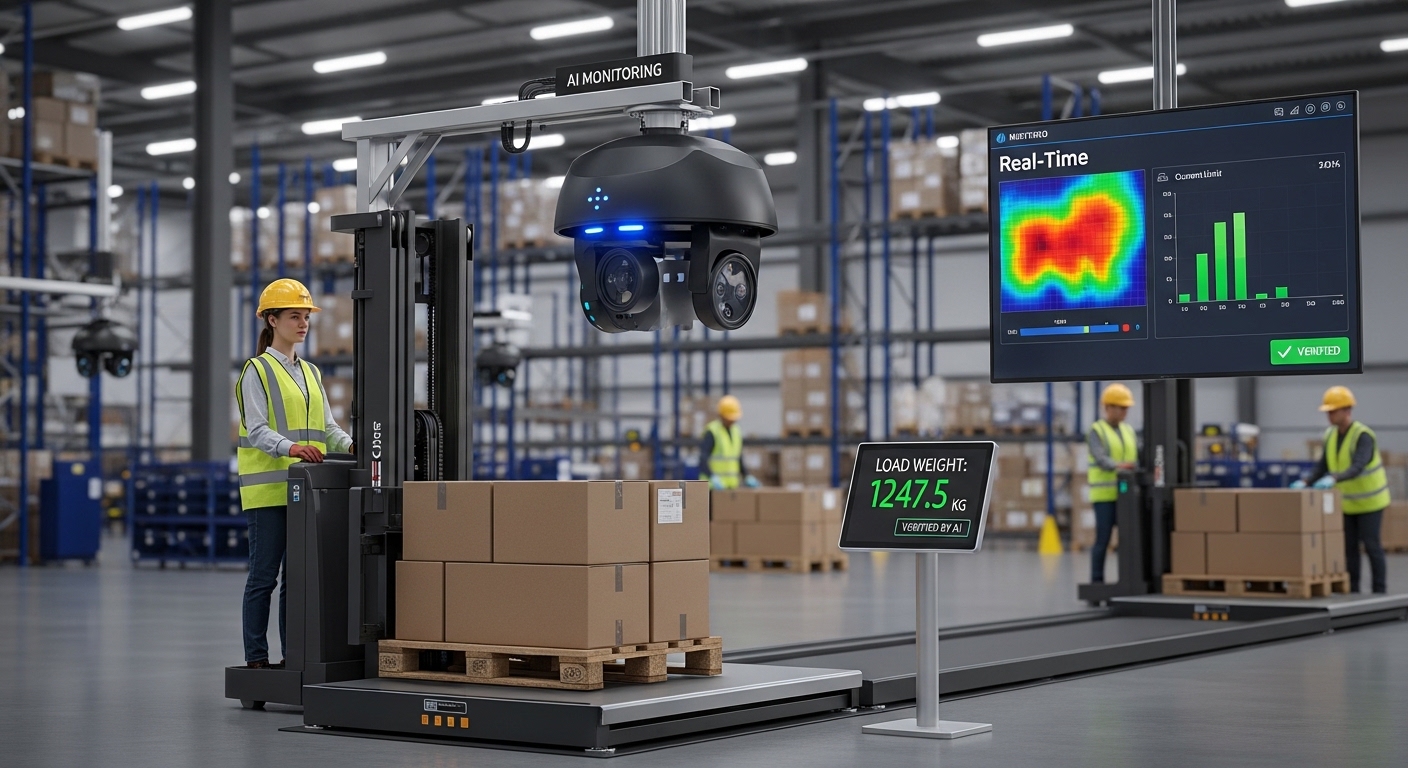
One of the leading causes of forklift tip-overs is the lifting of loads that exceed the vehicle’s rated capacity or have an improperly positioned center of gravity. To mitigate this risk, facilities are integrating weight verification directly into the early stages of the material handling process. Before a pallet ever reaches the forklift, its weight should be precisely determined to ensure it aligns with the safety specifications of the equipment being used.
Using high-precision industrial scales at the receiving dock or staging area allows workers to mark loads with accurate weight data. This practice eliminates the guesswork that often leads to overloading. Advanced onboard weighing systems can also be installed directly on the forklift’s hydraulic system, providing the driver with a live readout of the load weight. If the system detects a weight that compromises the truck’s stability triangle, it can automatically lock the lift function, preventing the mast from rising to a dangerous height. This proactive verification process is essential for maintaining the structural integrity of both the forklift and the racking systems.
4. Establish Strict Pedestrian and Vehicle Segregation
No matter how skilled a driver is, the presence of pedestrians in forklift operating zones creates an inherent risk. The most effective safety strategies involve the physical or visual separation of people and machines. This is achieved through the use of permanent guardrails, heavy-duty safety barriers, and clearly defined floor markings that designate separate travel lanes for forklifts and walking paths for staff.
In 2026, many warehouses have adopted “active” segregation systems. These systems utilize wearable sensors for pedestrians that communicate with the forklift’s onboard computer. When a pedestrian enters a restricted zone or comes within a certain radius of an active forklift, the truck may be programmed to slow down or stop completely, while the pedestrian’s wearable device vibrates to alert them of the approaching vehicle. Clear signage and the use of projected light signals (such as “blue spots” or red-zone perimeter lights) further reinforce these boundaries, ensuring visibility even in low-light conditions.
5. Adopt Digital Pre-Shift Inspections and Predictive Maintenance
The safety of a forklift is only as good as its mechanical condition. Moving away from paper-based logs to digital pre-shift checklists ensures that inspections are actually performed and that defects are reported instantly. Digital systems can require the operator to upload photos of critical components—such as tire condition, fork thickness, and hydraulic seals—before the ignition can be engaged.
Moreover, predictive maintenance powered by IoT sensors allows for the identification of mechanical wear before it leads to a failure. For instance, sensors can monitor the temperature of electric motors or the vibration levels in the steering assembly. By scheduling maintenance based on actual wear data rather than a generic calendar interval, facilities can ensure that every forklift on the floor is operating at peak safety performance. This reduces the likelihood of catastrophic failures, such as brake loss or steering lock-ups, which can occur when equipment is pushed beyond its safe operational limits.