




Choosing a baby stroller in India is no longer only about finding a product that looks good or fits a basic budget. For many parents, a stroller has become part of everyday movement: neighbourhood walks, doctor visits, mall outings, airport travel, car transfers and quick errands where one parent may already be carrying a bag, phone or baby essentials.
This is why the conversation around baby strollers is slowly changing. Parents are not just asking, “Which stroller is affordable?” They are also asking, “Which stroller will make my daily routine easier for the next few years?”
An entry-level stroller can be useful for occasional use. However, when a stroller becomes a regular part of a parent’s routine, the smaller details begin to matter more: how smoothly it moves, how quickly it folds, how stable it feels, how comfortable the seat is, whether the harness is easy to use, and whether the product continues to feel reliable and safe as the child grows.
That is where spending a little more can make sense. A premium stroller is not just about appearance or brand value. In many cases, the extra cost goes into better build quality, smoother handling, stronger materials, more thoughtful safety features, easier folding systems, improved suspension, long-term usability, and reliable after-sales support.
The purpose of this guide is not to say that every parent must buy the most expensive stroller. Instead, it explains what parents usually get when they move from a basic stroller to a more thoughtfully designed premium stroller, and why those extras can be valuable in everyday Indian parenting situations.
Why Stroller Quality Matters More in Daily Use
A stroller may look simple from the outside, but daily use quickly reveals the difference between a basic product and a well-designed one. Indian parenting environments are full of small transitions: moving from home to lift, lift to parking, parking to car, car to pavement, pavement to store, and then back again. Each of these moments tests the stroller’s fold, wheels, frame, storage, grip and overall stability.
For occasional use, parents may overlook a stiff fold or less responsive wheels. But for daily use, those small inconveniences repeat many times. A fold that needs both hands can feel frustrating when one hand is occupied. Wheels that do not turn smoothly can make crowded spaces difficult. A seat that does not recline comfortably may limit nap-time use.
This is why premium stroller features should be understood as practical parenting support, not luxury add-ons. The right features reduce effort for the parent and improve comfort for the child.
Entry-level vs Premium Stroller: What Usually Changes?
| Feature Area | Entry-Level Strollers Usually Focus On | Premium Strollers Usually Add | Why It Matters for Parents |
| Frame and build | Basic structure for short outings and simple use. | Stronger frame materials, better finishing and improved stability. | A stable frame gives parents more confidence during daily movement, especially outdoors or on mixed surfaces. It also improves safety for the child and makes the ride more comfortable by offering better balance and support. |
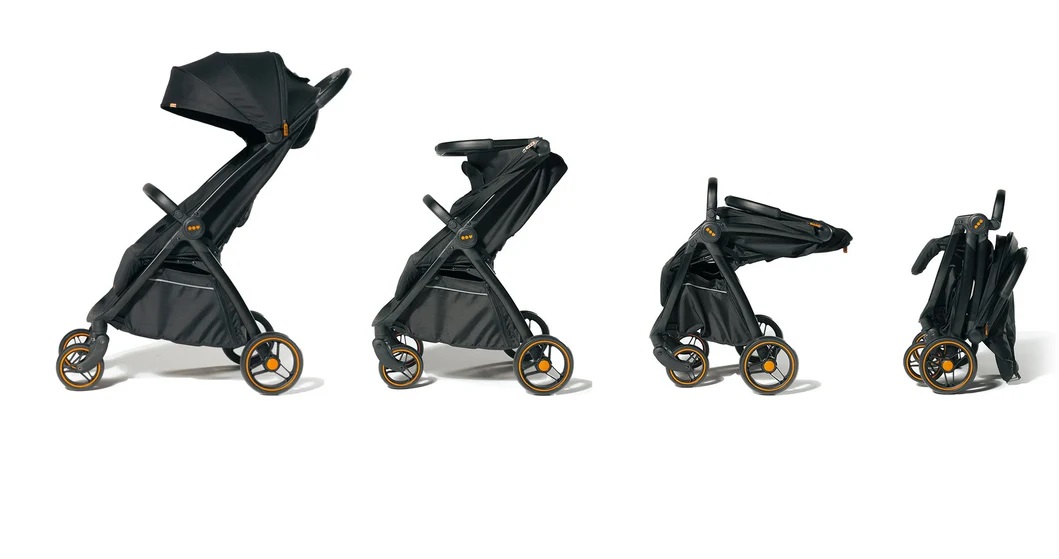
| Folding system | Standard fold that may need more effort or both hands. | One-hand fold or smoother fold mechanism designed for quicker transitions. | Helpful when entering a car, climbing stairs, storing the stroller or managing a baby alone. |
| Wheels and suspension | Usually comes with plastic wheels that work only on flat surfaces. On even slightly uneven roads or pavements, the ride can feel jerky, which may affect the baby’s comfort and overall safety. | Better wheel movement, suspension support and smoother turning. | Useful for Indian pavements, uneven lanes, apartment driveways and daily outdoor walks. |
| Safety details | Basic harness, brakes and locking features. | More refined harness systems, stronger locks, better stability and certified safety standards where applicable. | Parents feel more secure when the stroller is used frequently and across different environments. |
| Seat comfort | Basic seating with limited recline, often without enough cushioning. This can make the stroller less comfortable for the baby, especially during longer outings or daily use. | Better recline options, footrest support, softer fabrics and improved child comfort. | Important for naps, longer outings and babies who spend more time in the stroller. |
| Storage and practicality | Basic basket or limited storage space. | Larger or stronger under-seat storage and easier access. | Useful for diaper bags, shopping items, bottles, toys and everyday essentials. |
| Long-term use | May work well for limited age or occasional use. | Higher carrying capacity and design that supports growth over more years. | Can reduce the need to replace the stroller too soon. |
1. Better Folding can Make Daily Transitions Easier
One of the biggest differences parents notice is the folding experience. A stroller is rarely used only in open spaces. It is folded before entering a car, stored beside a sofa, carried into a lift, moved through narrow corridors and sometimes managed while the parent is holding the child or another bag.
In such moments, a smoother fold system is not just a nice feature. It saves time and reduces the awkwardness of handling multiple things at once. Premium strollers often focus on making this movement easier through one-hand fold designs or more intuitive folding structures.
For parents who travel often or use the stroller every day, this convenience can become one of the most valuable upgrades.
2. Stronger Build Quality Improves Confidence
The frame is one of the most important parts of a stroller, but it is also one of the easiest features to ignore during purchase. Parents may first notice the colour, size or price. However, after regular use, the quality of the frame starts to matter more.
A stronger frame can help the stroller feel more stable, especially when moving across uneven surfaces, apartment ramps, parking areas or outdoor walking tracks. Premium strollers often use better materials and more refined engineering to make the stroller feel steady without making it unnecessarily difficult to handle.
This matters because stroller use is repetitive. A parent should not feel like they are adjusting, balancing or fighting with the product every time they step out.
3. Better Wheels and Suspension Improve Real-world Movement
In India, stroller movement is rarely limited to perfectly smooth floors. Parents often move across tiled apartment lobbies, uneven footpaths, speed breakers, parking slopes, garden paths and crowded shopping areas. This makes wheel quality and suspension more important than many parents realise at first.
Cheap strollers often come with basic plastic wheels, which may feel jerky even on slightly uneven surfaces. EVA wheels, like the ones used in Loopie strollers, offer better shock absorption, smoother movement and improved comfort for the baby. They also provide parents with better control during everyday outdoor use, making the stroller feel more stable and reliable across different Indian surfaces.
Entry-level strollers may work comfortably on flat indoor surfaces, but daily use can feel different when the stroller is pushed outdoors. Better wheels, smoother turning and stronger suspension support can reduce jerks and make the ride more comfortable for the baby.
For the parent, it also means less pushing effort and better control. This is especially useful when moving with one hand, changing direction quickly or handling crowded spaces.
4. Safety Details are About Everyday Reassurance
Every parent expects a stroller to be safe. However, premium strollers often focus on safety as a complete experience rather than only one feature. This can include a more secure harness, stable locking mechanism, stronger brakes, reliable materials and compliance with recognised stroller safety standards.
A five-point harness, for example, can hold the child more securely across the shoulders, waist and between the legs. Good brakes help keep the stroller steady when parked. A stable frame reduces wobbling during movement. These features may not look dramatic in a product image, but they matter during daily use.
For parents, better safety details create peace of mind. The stroller feels less like a temporary baby product and more like a reliable part of their routine.
5. Comfort Becomes Important as Outings Get Longer
A stroller is not only pushed by the parent; it is experienced by the child. Seat comfort, recline, foot support, fabric quality and canopy coverage can influence whether a baby rests easily or becomes uncomfortable during longer outings.
Premium strollers usually pay more attention to these comfort details. Better recline support helps during naps. A comfortable footrest supports growing children. Better fabric can feel more pleasant during repeated use. A larger or better-designed canopy can help during outdoor movement.
For parents who plan to use the stroller for walks, travel or day-long family outings, these comfort features can make the product much more usable.
6. Higher Capacity can Support Longer Use
Another reason parents may spend more on a premium stroller is long-term usability. If a stroller supports a higher child weight and remains comfortable as the baby grows, it may be used for a longer period.
This matters because many families do not want to replace baby gear too quickly. A stroller that works from the early months through toddlerhood can feel more practical than a product that is outgrown sooner.
When evaluating cost, parents should think beyond the purchase price and consider cost per year of use. A stroller that is used regularly for several years may offer better value than a lower-cost product that is used less often or replaced early.
How the Loopie Hop Reflects Premium Stroller Design
A helpful way to understand premium stroller value is to look at the kind of details included in a stroller designed for frequent, real-life use. Loopie Hop is one such example of a premium baby stroller built around everyday parent convenience rather than only basic mobility.
Its feature set includes one-hand folding, self-standing, an aluminium frame, 360-degree wheels, superior suspension, a magnetic buckle and a five-point safety harness. These details are not just technical additions; they support smoother transitions, easier handling and a more secure everyday experience for both parent and child.
The Loopie Hop supports children from birth up to 22 kg, making it usable through toddlerhood without an early replacement. It weighs 8.4 kg, uses EVA wheels with 6-inch front and 8-inch rear sizing, Oxford cotton seat fabric, and a 30L underseat basket with 5 kg capacity.
For parents who expect to use a stroller regularly, these details help explain why a premium stroller may cost more. The extra investment is not only for the product’s look; it also goes into handling, structure, safety, comfort and day-to-day ease.
When an Entry-level Stroller May Still be Enough
A premium stroller is not automatically the right choice for every family. Some parents may only need a stroller for occasional short outings, limited indoor use or rare travel. In those cases, an entry-level stroller may serve the purpose well.
The decision depends on usage. If the stroller will mostly be used once in a while, parents may not need every premium feature. However, if it will be used daily or across multiple environments, the case for spending more becomes stronger.
When Spending More Makes Practical Sense
• You plan to use the stroller almost every day.
• You often move between home, car, lift, shops and outdoor spaces.
• You want a smoother fold that does not slow you down.
• You need better wheels and suspension for uneven surfaces.
• You prefer a stroller that supports your child for a longer period.
• You want stronger safety, comfort and stability features.
• You see the stroller as daily parenting gear, not an occasional accessory.
Buying checklist: How parents can judge value beyond price
| Question to Ask | Why It Matters |
| Can I fold it easily while managing other things? | A smoother fold can make daily transitions less stressful. |
| Does the stroller feel stable when pushed? | Stability affects both safety, confidence and parent comfort. |
| Are the wheels suitable for outdoor use? | Better wheel design can improve movement on Indian surfaces. |
| Does the seat recline enough for naps? | Comfort matters during longer outings. |
| What is the maximum child weight capacity? | Higher capacity can support longer usability. |
| Is the harness secure and easy to use? | Safety features should be practical, not complicated. |
| Is there enough storage for daily essentials? | Storage reduces the need to carry multiple bags separately. |
| Will this stroller still suit my routine one or two years later? | Long-term usability can make the purchase more valuable. |
Price Matters, but Daily Experience Matters More
The best stroller is not always the lowest-priced one or the most feature-heavy one. It is the one that fits the way parents actually move through the day.
For parents who need a stroller only occasionally, a simple option may be enough. But for parents who depend on a stroller for everyday outings, smoother folding, stronger build quality, better wheels, improved comfort, safer harnessing and longer usability can make a real difference.
That is why spending a little more on a stroller can often be a practical decision. The value is not only in owning a premium product; it is in reducing friction every time the stroller is folded, pushed, parked, stored or used to keep a child comfortable on the go.
In the end, a good stroller should not slow parents down. It should quietly support their routine, make movement easier and grow with the child through everyday moments.