









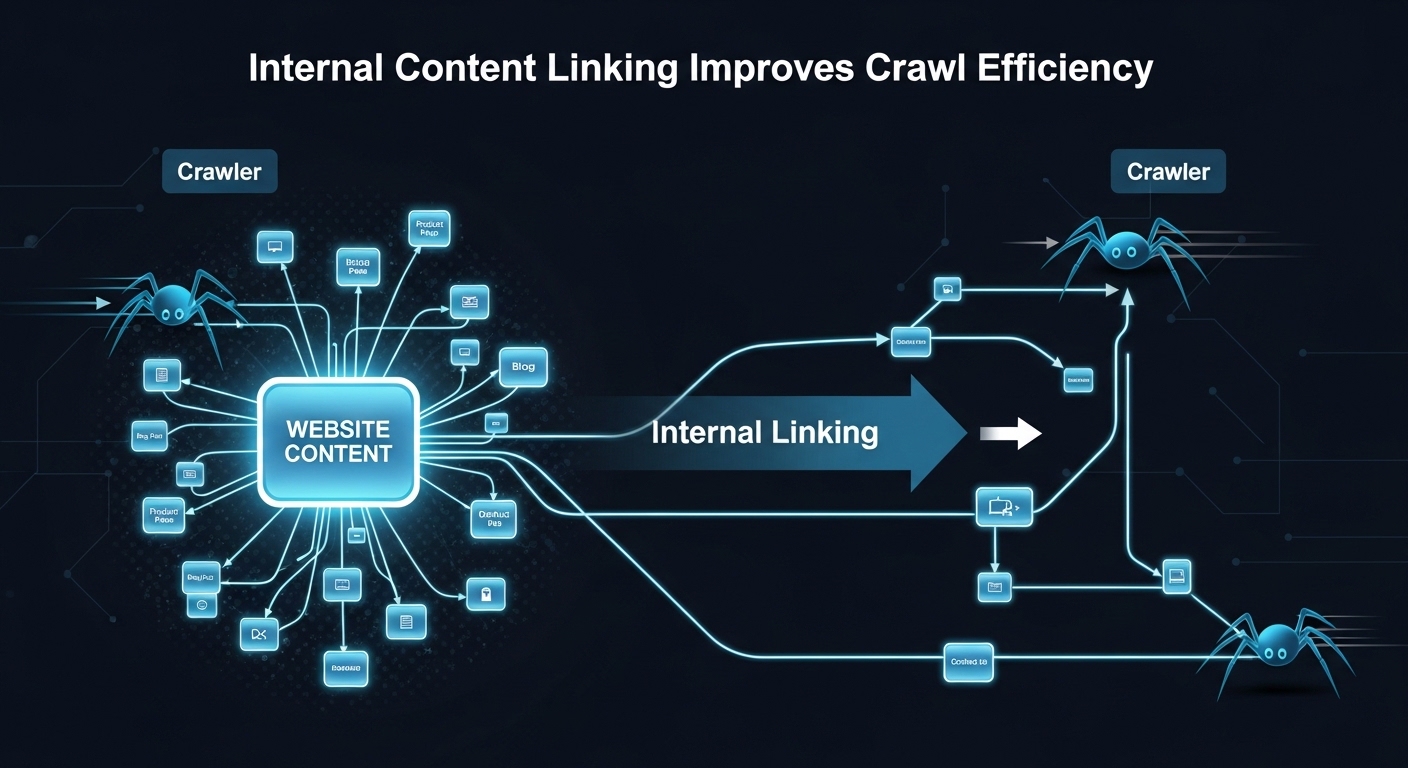
Internal content linking is one of the most underutilised yet impactful elements of search engine optimisation. While backlinks often receive significant attention, internal links play a crucial role in how search engines crawl, understand, and prioritise pages within a website. When implemented strategically, internal linking improves crawl efficiency, strengthens site architecture, and supports long-term organic visibility.
For businesses investing in SEO, particularly those operating in competitive digital markets such as Singapore understand how internal content linking improves crawl efficiency is essential for sustainable search performance.
Understanding Crawl Efficiency in SEO
Crawl efficiency refers to how effectively search engine bots discover, crawl, and process pages on a website using a limited crawl budget. Search engines do not crawl every page endlessly; instead, they allocate resources based on perceived importance, structure, and link signals.
A site with poor internal linking may leave important pages undiscovered or crawled infrequently. Conversely, a well-linked site helps search engines move through content logically and prioritise high-value pages.
Internal links act as pathways that guide crawlers, making them a foundational component of crawl efficiency.
What Is Internal Content Linking?
Internal content linking refers to hyperlinks that connect one page of a website to another page on the same domain. These links can appear in:
- Body content
- Navigation menus
- Breadcrumbs
- Footer links
- Related content sections
From an SEO perspective, contextual internal links within content are particularly valuable because they provide relevance signals and guide both users and search engines through related topics.
How Internal Linking Improves Crawl Efficiency
1. Helps Search Engines Discover Pages Faster
Search engine crawlers primarily discover new pages through links. Pages that are not linked internally, often referred to as orphan pages are difficult for crawlers to find.
A strong internal linking structure ensures:
- New content is discovered quickly
- Deep pages are accessible within a few clicks
- Important pages are not isolated from the rest of the site
By linking related content together, websites make it easier for crawlers to systematically navigate the entire domain.
2. Improves Crawl Pathways and Reduces Wasted Crawl Budget
Crawl budget is not unlimited. When internal links are poorly structured, crawlers may spend excessive time on low-value pages or duplicate URLs.
Effective internal linking:
- Directs crawlers to priority pages
- Minimises unnecessary crawling of thin or repetitive content
- Creates logical crawl paths based on topical relevance
This is particularly important for large websites, blogs, and e-commerce platforms where hundreds or thousands of URLs exist.
3. Signals Page Importance to Search Engines
Internal links help search engines determine which pages matter most. Pages that receive more internal links, especially from authoritative pages are often treated as higher priority.
Key signals include:
- Number of internal links pointing to a page
- Placement of links (contextual links carry more weight)
- Relevance of linking pages
By strategically linking to cornerstone content, category pages, and service pages, websites can influence how search engines allocate crawl resources.
Internal Linking and Site Architecture
Internal linking is closely tied to site architecture. A clear hierarchy improves both crawl efficiency and user experience.
Flat vs Deep Structures
- Flat architecture: Important pages are reachable within a few clicks
- Deep architecture: Pages are buried several layers deep, reducing crawl frequency
Internal links help flatten site architecture by creating shortcuts between related content, ensuring crawlers do not need to navigate excessive levels to reach key pages.
Contextual Linking and Topical Relevance
Contextual internal links, those placed naturally within content, provide strong semantic signals. They help search engines understand how topics are related across the site.
Best Practices for Contextual Linking
- Use descriptive, keyword-relevant anchor text
- Link between topically related articles
- Avoid generic anchors such as “click here”
- Maintain natural placement within sentences
This approach supports topical clustering, which improves crawl efficiency by reinforcing thematic connections between pages.
Internal Linking and Indexation
Crawl efficiency directly impacts indexation. Pages that are crawled more frequently and effectively are more likely to be indexed accurately.
Internal linking supports indexation by:
- Reducing reliance on XML sitemaps alone
- Reinforcing which pages should be indexed
- Helping search engines understand page relationships
When combined with proper indexation controls (such as noindex tags where appropriate), internal links help prevent index bloat while ensuring valuable pages remain visible in search results.
Managing Internal Links at Scale
For content-heavy websites, managing internal links manually can be challenging. However, structured approaches can maintain crawl efficiency over time.
Scalable Internal Linking Strategies
- Create topic hubs and pillar pages
- Regularly audit internal links using SEO tools
- Update older content with links to newer pages
- Remove or redirect broken internal links
Regular audits help identify orphan pages, excessive link depth, and missed linking opportunities.
User Experience and Crawl Efficiency
Although crawl efficiency is a technical concept, it is closely linked to user experience. Search engines favour sites that are easy to navigate.
Internal linking improves UX by:
- Helping users find related content easily
- Reducing bounce rates
- Increasing time on site
Positive user engagement signals reinforce crawl prioritisation, creating a feedback loop that benefits SEO performance.
Internal Linking Mistakes to Avoid
To maximise crawl efficiency, it is important to avoid common internal linking pitfalls:
- Overloading pages with excessive links
- Linking without contextual relevance
- Using inconsistent anchor text
- Ignoring low-performing or outdated content
- Leaving orphan pages unaddressed
A disciplined internal linking strategy focuses on clarity, relevance, and structure rather than volume.
Conclusion
Internal content linking is a foundational SEO practice that directly influences crawl efficiency, indexation, and site visibility. By guiding search engines through a clear, logical network of pages, websites can ensure that their most valuable content receives appropriate crawl attention.
For businesses operating in competitive digital environments, particularly in Singapore’s SEO landscape, internal linking should be treated as a strategic priority rather than an afterthought. When executed consistently, it supports both technical SEO performance and long-term organic growth.
Ready to strengthen your website’s crawl efficiency and internal SEO foundations? Partner with an experienced advertising ad agency that understands how strategic internal linking supports discoverability, indexation, and sustainable search growth. Start optimising your internal structure today.